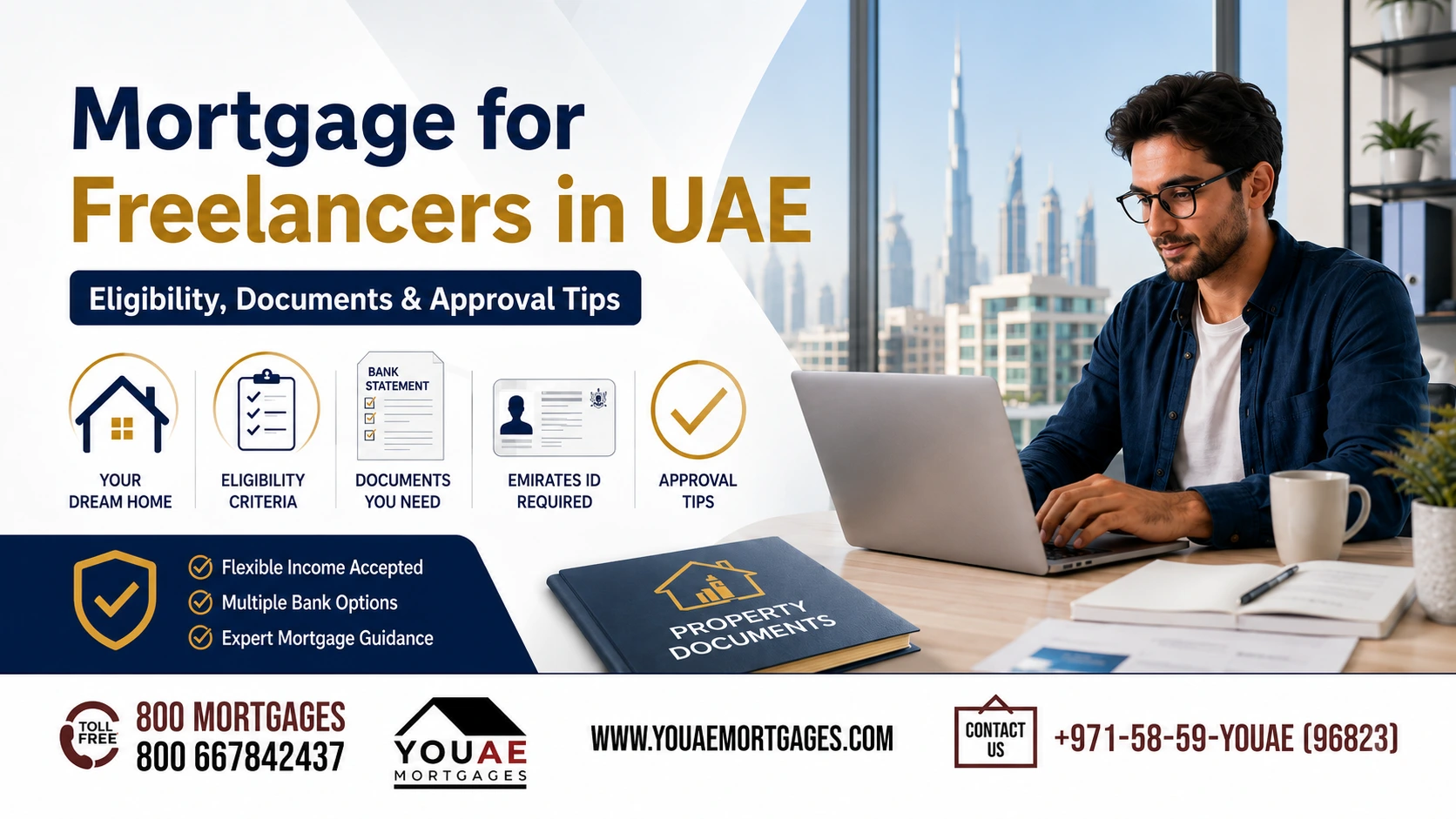
Applying for a mortgage in the UAE can feel overwhelming, especially if you are navigating through eligibility criteria, documentation requirements, and bank policies for the first time. Whether you’re a first-time homebuyer, an expat investor, or a self-employed professional, understanding what lenders look for can dramatically improve your chances of mortgage approval.
At YOUAE Mortgages, we help applicants prepare strong, bank-ready applications that stand out. In this guide, we share 10 practical tips to improve your mortgage approval chances in the UAE — backed by industry insight, real-world experience, and a deep understanding of how local banks assess risk.
1. Know Your Eligibility Criteria
Before applying, it’s crucial to understand what UAE banks expect from mortgage applicants.
- Minimum age requirements
- Residency status for expats
- Income thresholds
- Repayment age limits (commonly up to age 65 for salaried and up to 70 for self-employed, sometimes more depending on bank policy)
By starting with a clear picture of eligibility, you avoid surprises and align your expectations with bank requirements.
Pro Tip: Use YOUAE Mortgages’ eligibility assessment tool to see which lenders fit your profile.
2. Review and Improve Your Credit Score
Your credit score from the Al Etihad Credit Bureau is one of the first things banks check.
A strong credit record shows lenders that you are a responsible borrower. Late payments, high credit card exposure, or past defaults can significantly reduce approval chances.
What you can do:
- Pay down outstanding balances
- Avoid late payments
- Reduce unused credit limits
- Check your credit report for errors
Insight: A clean credit history not only improves approval chances but also helps you secure better interest rates.
3. Minimize Your Debt Burden Ratio
Banks calculate your Debt Burden Ratio (DBR) to determine how much of your monthly income goes toward loan repayments. A high DBR limits your borrowing capacity.
Ways to improve DBR:
- Pay off personal loans or higher-interest debts
- Close unnecessary credit cards
- Avoid taking new loans before applying
YOUAE Mortgages can help you plan debt restructuring to improve your DBR before application. For more information contact a mortgage expert at YOUAE Mortgages by calling 0 0971-58-59-96823
4. Organize Complete and Accurate Documentation
Missing or inconsistent documents are among the most common reasons for mortgage rejection.
Typical documents needed:
- Passport, visa and Emirates ID
- Salary certificate or trade license
- Bank statements (usually last 3 to 6 months)
- Credit report
- Property documents
Presenting a clean, complete file increases credibility and speeds up the approval process.
5. Maintain Stable Employment or Business Income
Banks favour profiles with consistent income and employment history. Frequent job changes or irregular business earnings can signal instability to lenders.
For Salaried Applicants:
- Provide employer letters
- Show stable salary credits
For Self-Employed Applicants:
- Submit audited financials
- Provide detailed bank statements
YOUAE Mortgages assists self-employed borrowers in presenting their finances clearly to banks. Freelancers should also prepare their income story carefully, and this guide to mortgage for freelancers in UAE explains how to make freelance income easier for banks to assess.
6. Save for a Realistic Down Payment
Understanding the down payment requirements helps you plan your finances better.
UAE minimum standards:
- 20 % for UAE residents (properties under AED 5M)
- 30 % for higher value properties and non-resident buyers
Insufficient down payment often leads to automatic rejection. A higher down payment strengthens your application by reducing lender risk.
7. Choose the Right Banks to Apply To
Not all banks evaluate applicants in the same way. What may be acceptable to one bank might be declined by another.
YOUAE Mortgages works with multiple UAE lenders and matches your profile with banks most likely to approve your loan — saving time, paperwork, and frustration.
Expert Tip: Applying to multiple banks without strategy can harm your credit score. A planned approach helps you target the right lenders from the start.
Approval becomes easier when your application is matched to the right product, so review this guide on UAE mortgage options by buyer type before submitting your file.
8. Consider Selling or Reducing Unproductive Liabilities
Unproductive liabilities such as idle credit cards or unused loans can drag down your approval chances.
Smart liability management includes:
- Cancelling unused cards
- Closing dormant loans
- Consolidating balances
Minimizing unnecessary debt improves your financial profile and presents a stronger case to lenders.
9. Strengthen Your Application with a Co-Signer or Guarantor
If your profile is borderline, adding a financially strong co-signer or guarantor can help. This demonstrates shared responsibility and provides comfort to lenders.
This strategy is especially useful for:
- First-time buyers
- Applicants with low income
- Clients with thin credit history
YOUAE Mortgages can advise you on when and how to add a co-signer effectively.
10. Use a Professional Mortgage Advisor
One of the biggest advantages you can have when applying for a mortgage in the UAE is professional support.
At YOUAE Mortgages, we:
- Assess your eligibility before application
- Review credit and liabilities
- Select the most suitable banks
- Prepare and submit accurate documentation
- Guide you through every step of approval
This significantly improves your chances of success and reduces stress throughout the process.
Conclusion
Getting mortgage approval in the UAE does not have to be daunting. With the right preparation, financial clarity, and strategic planning, you can significantly improve your approval chances.
Whether you’re buying your first home or investing in property, these 10 tips will position you for success.
Looking for personalised advice? Contact YOUAE Mortgages today by calling 0 0971-58-59-96823 for a tailored mortgage advice that works for you.
People Also Ask
How long does mortgage approval usually take in the UAE?
Mortgage approval timelines vary by bank, but most approvals take between 5 to 15 working days once complete documents are submitted. Delays often occur due to missing paperwork or property valuation issues.
Can I apply for a mortgage while still searching for a property?
Yes, many banks allow pre-approval before selecting a property. A pre-approval helps you understand your budget and strengthens your position when negotiating with sellers.
Do UAE banks offer mortgages to newly arrived expats?
Yes, newly arrived expats can apply, but approval depends on employment stability, salary level, and employer profile. Some banks require a minimum employment duration in the UAE.
Is it possible to get a mortgage without a salary transfer?
Some UAE banks offer mortgages without mandatory salary transfer, but these usually come with stricter eligibility criteria or higher interest rates. YOUAE Mortgages helps identify suitable options.
Does nationality affect mortgage approval in the UAE?
Nationality can influence bank policies, especially for non-resident or higher-risk profiles. However, strong income, credit history, and documentation can offset nationality-based restrictions.
Can bonuses or commissions be included in mortgage income?
Yes, some banks consider bonuses, commissions, or allowances, but usually at a reduced percentage and only if they are consistent and well documented over time.
What happens if my property valuation is lower than the purchase price?
If the valuation is lower, the bank will base the loan amount on the valuation, not the purchase price. This means you may need to increase your down payment or renegotiate the price.
Can I switch banks if my mortgage application is delayed?
Yes, but switching mid-process should be done carefully to avoid multiple credit checks. YOUAE Mortgages advises on whether switching banks will improve outcomes or cause delays.
Are Islamic mortgages easier or harder to get approved?
Approval criteria for Islamic mortgages are similar to conventional loans. The choice depends on personal preference, pricing, and bank policy rather than ease of approval.
Does having dependents affect mortgage approval?
Yes, banks consider family obligations when calculating affordability. However, this rarely causes rejection if income and debt levels remain within acceptable limits.
Can I improve approval chances by choosing a shorter loan tenure?
In some cases, yes. A shorter tenure reduces bank risk and may help with approval, provided the monthly installment remains affordable.
Why should I consult a mortgage advisor before applying?
A mortgage advisor prevents avoidable mistakes, selects the right banks, and ensures your application is structured correctly. This reduces rejection risk and saves time and effort.