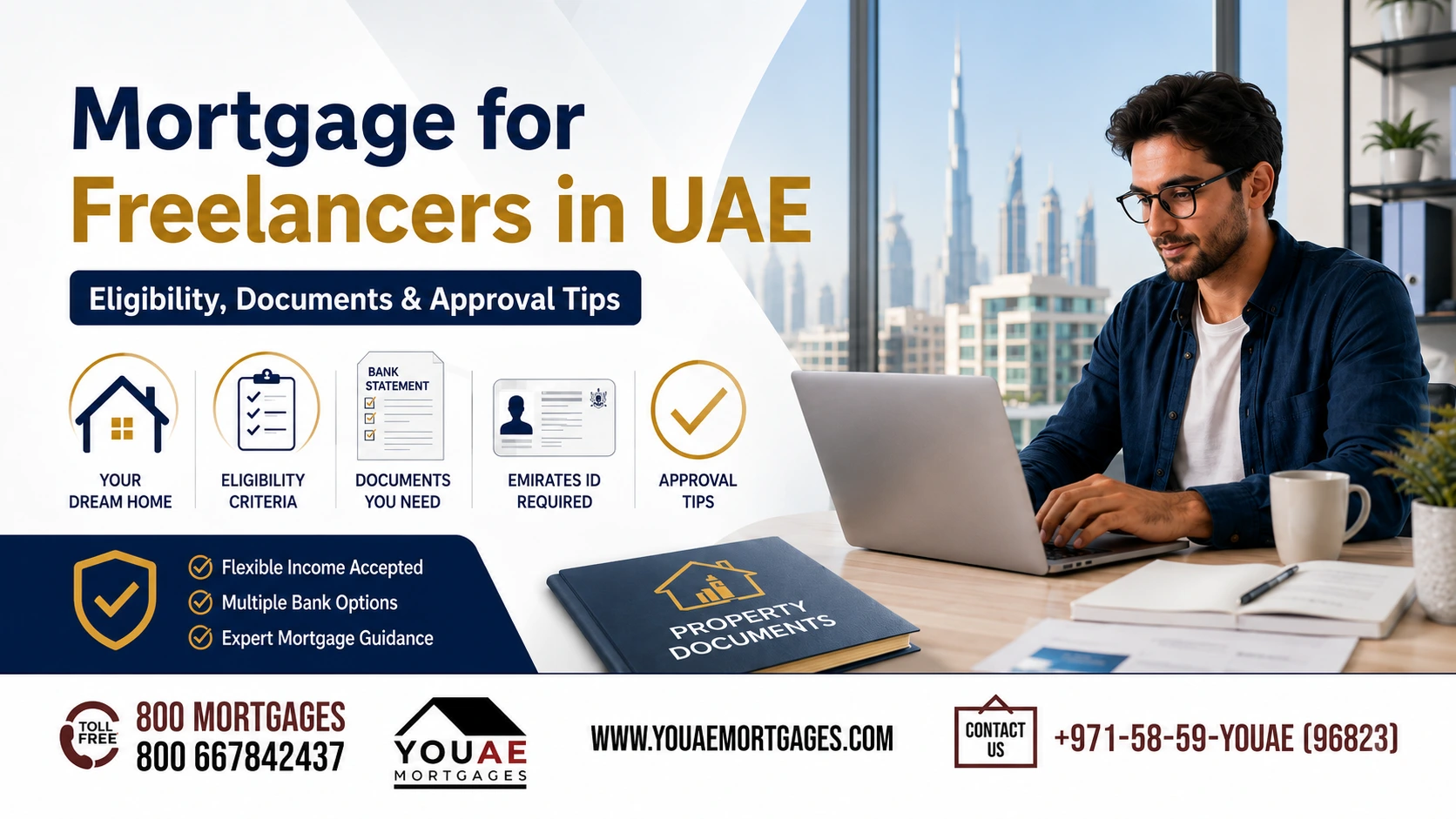
Buying a home in the UAE continues to be a structured and transparent process in 2026. With stronger regulations, competitive interest rates, and improved digital approvals, home loans are now more accessible for residents, expatriates, and foreign buyers alike. However, understanding how the process works, the eligibility criteria, and the different mortgage options available is essential before making a financial commitment.
At YOUAE Mortgages, we help buyers and property investors navigate every stage of the home loan journey with clarity, accuracy, and expert guidance. This comprehensive guide explains how a home loan works in the UAE in 2026 so you can make informed decisions with confidence.
What Is a Home Loan in the UAE?
A home loan, also known as a residential mortgage, is a financing solution offered by UAE banks that allows buyers to purchase property by borrowing funds against it. The property remains mortgaged to the bank until the loan is fully repaid.
In the UAE, home loans are available for ready properties, off plan units in approved developments, and refinancing of existing homes. Both international and local lenders offer various mortgage options, including traditional mortgages and Islamic mortgages, to suit different buyer needs.
Who Can Apply for a Home Loan in 2026?
Home loan eligibility in the UAE is based on financial stability rather than nationality alone. Both UAE nationals and foreign buyers can apply, subject to meeting bank criteria.
Residency Status
- UAE Residents: Typically qualify for higher loan-to-value (LTV) ratios and more favorable terms.
- Non-Residents: Can also apply but usually face stricter LTV limits and higher down payment requirements. Loans for non-residents are often limited to freehold areas.
Minimum Monthly Income and Salary Requirements
Banks require a minimum salary or monthly income, which varies by lender and property type. Salaried applicants must provide salary slips and proof of consistent income, while self-employed individuals must submit audited financial statements and income proof.
Age and Credit Score
Applicants must be at least 21 years old, with loans repaid before reaching retirement age (usually 60-65). A good credit history and credit report, including a strong credit score, significantly improve approval chances.
Debt Burden Ratio and Affordability
Monthly financial commitments, including existing loans and credit card payments, must stay within regulated limits. Mortgage advisers can help buyers accurately check eligibility and affordability before submitting a mortgage application.
How Much Can You Borrow?
The loan amount is calculated based on income, liabilities, credit score, and property value.
Loan to Value Ratio (LTV)
- First-time Buyers: UAE nationals may receive up to 80% financing on ready properties, while expatriates and foreign buyers typically get 60-75%.
- Off Plan Units: LTV ratios are generally lower, often between 50% and 60%, requiring higher down payments.
- Buy to Let Mortgage: While the UAE does not offer a separate buy-to-let mortgage product, investors purchasing properties for rental income use standard residential mortgages, often with stricter deposit requirements.
Affordability Review
Banks evaluate how much you can comfortably repay each month, considering your minimum monthly income and other financial obligations. The Emirates Interbank Offered Rate (EIBOR) often influences variable interest rates, affecting monthly payments.
Down Payment and Extra Costs
Purchasing property involves more than just the loan amount.
Down Payment
Buyers must contribute a portion of the purchase price from personal funds. For foreign buyers and non-residents, this typically ranges from 30% to 50%, depending on property type and lender policies.
Additional Costs
These include property registration fees, valuation charges, mortgage registration fees, bank processing fees (usually 1%-1.5% of the loan amount), agent commissions, insurance, and early settlement fees. Planning for these extra costs early avoids surprises during property purchases.
Documents Required for a Home Loan
Accurate documentation is essential for smooth approval.
For Salaried Applicants
- Valid passport and Emirates ID
- Residence visa
- Salary certificate and recent salary slips
- Bank statements for the past 3-6 months
- Tenancy contract or proof of residence (if applicable)
For Self-Employed Applicants
- Trade licence and company ownership documents
- Audited financial statements
- Business bank statements
- Income proof such as tax returns from home country
Property Documents
- Signed sale agreement or lease agreement (for buy-to-let considerations)
- Title deed or reservation form
- Valuation report
Mortgage advisers recommend submitting all documents carefully to avoid delays and improve chances of final approval.
What Is Mortgage Pre-Approval?
Mortgage pre-approval is a basic approval from the bank indicating how much you are eligible to borrow based on submitted documents and credit checks. It allows buyers to search for properties within budget and strengthens negotiating power with sellers.
Pre-approvals are usually valid for 60-90 days and are subject to final valuation and eligibility confirmation.
Types of Home Loans and Interest Rates in 2026
Traditional Mortgages
These are interest-based loans where monthly payments include principal and interest. Fixed and variable rate options are available.
Islamic Mortgages
Sharia-compliant home finance avoids traditional interest. Instead, banks use profit-sharing or lease-to-own structures, often through a lease agreement. These options are popular among UAE nationals and buyers seeking compliant financing.
Fixed Rate Mortgages
Offer predictable monthly payments for a set period (1 to 5 years), ideal for buyers seeking stability.
Variable Rate Mortgages
Rates fluctuate based on benchmarks like the Emirates Interbank Offered Rate (EIBOR), meaning monthly payments can rise or fall with market conditions.
Financing Off Plan Units
Banks finance off plan units in approved developments with stage-based disbursements linked to construction progress. Loan-to-value ratios are lower, and buyers must often cover 40%-50% upfront.
Step-by-Step Home Loan Process
- Check Eligibility: Assess minimum salary, credit score, and affordability.
- Mortgage Pre-Approval: Submit documents for basic approval.
- Property Search: Focus on freehold areas and approved developments.
- Submit Documents: Provide full paperwork for final approval.
- Property Valuation: Bank conducts valuation of the property.
- Final Approval and Offer: Receive formal mortgage offer with terms.
- Mortgage Registration and Transfer: Register mortgage with Dubai Land Department and complete ownership transfer.
- Monthly Payments: Set up direct debit for monthly installments.
Repayment and Loan Management
Home loans are repaid through monthly installments including principal and interest. Early settlement is possible but may incur an early settlement fee capped by the Central Bank. Mortgage advisers can help plan prepayments and manage loan tenure effectively.
Benefits of Using Mortgage Advisers
Mortgage brokers can guide buyers through complex eligibility checks, help submit documents correctly, negotiate better rates, and identify the best mortgage options from multiple lenders. They are especially helpful for first-time buyers, foreign buyers, and property investors.
Using Mortgage Calculators Before Applying
Mortgage calculator estimate monthly payments, total interest, and affordability based on loan amount, interest rate, and tenure. Using these tools helps buyers plan finances realistically before submitting a mortgage application.
Final Thoughts
Understanding how a home loan works in the UAE in 2026 is key to making smart property decisions. From eligibility and documentation to approval and repayment, every stage requires careful planning and expert advice.
For professional guidance Contact YOUAE Mortgages on 00971-58-59-96823 or write to us on info@youaemortgages.com gain access to expert mortgage advisers, multiple lender options including international and local lenders, and a smoother mortgage experience from start to finish.
People Also Ask
Can I change banks after taking a home loan in the UAE?
Yes, home loans can be transferred to another bank through a mortgage buyout if better rates or terms are available.
Is it possible to get a home loan without a salary transfer?
Some banks allow non salary transfer mortgages, but interest rates and eligibility criteria may differ.
Do UAE banks finance off plan properties in 2026?
Yes, selected banks finance approved off plan projects from reputed developers, subject to construction progress and eligibility checks.
What happens if my income changes during the loan tenure?
Banks may reassess affordability if income decreases significantly. Maintaining an emergency fund is strongly advised.
Can bonuses or commissions be included in home loan eligibility?
Some banks consider consistent bonuses or commissions if supported by income history and documentation.
Is joint home loan application allowed in the UAE?
Yes, spouses or close family members can apply jointly to improve eligibility and loan amount.
Are Islamic home loans different from conventional mortgages?
Yes, Islamic home finance follows Sharia compliant structures instead of traditional interest based lending.
Can I rent out my property while it is mortgaged?
In most cases yes, provided the property is registered and rental income complies with bank terms.
What happens if I want to sell a property with an active mortgage?
The outstanding loan must be settled or transferred before ownership can be fully transferred to the buyer.
Are early settlement charges applicable in 2026?
Yes, early settlement fees may apply but are capped as per UAE Central Bank regulations.
Do banks require life insurance for home loans?
Most banks require life insurance coverage to protect the loan in case of unforeseen events.
Can I apply for a home loan while changing jobs?
Banks usually prefer applicants to complete probation before approving a mortgage.
How long does it take to receive loan disbursement after approval?
Once documentation and registration are complete, disbursement usually happens within a few working days.
Does owning a property help with UAE residency or visa options?
Property ownership may support eligibility for certain long term residency options, subject to government rules.